The implementation of the EU Entry/Exit system (EES) starting In Spain on October 12, 2025 represents a fundamental change in the management of European borders, moving towards a digital, biometric, and automated model. Its main goal is to enhance security and immigration control, but it will also streamline procedures for frequent travellers in the long term.
Full EU electronic entry/exit will be in place by June 2026.
For affected travellers, it is important to be informed about the new process to facilitate their border crossing, especially during the initial phases of implementation where delays might be experienced.
What is the entry/exit system (EES)?:
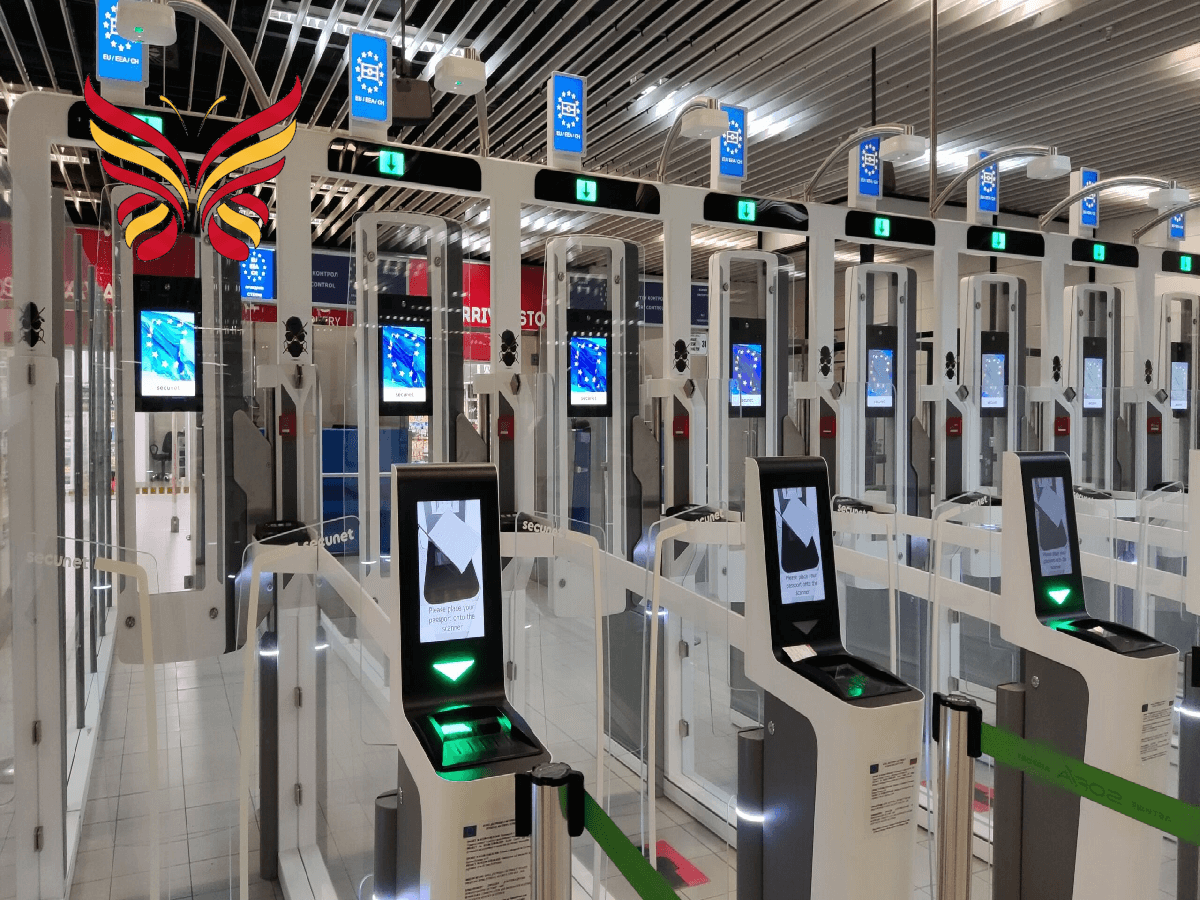
The EU entry/exit system (EES) starting in Spain on October 12, 2025, is an automated IT system for registering travellers designed to modernise border control at the external borders of the Schengen Area. It will replace the manual stamping of passports with a digital record that collects biometric data and tracks the movements of travellers.
- Main Objectives:
- Strengthen border security.
- Prevent irregular immigration and overstays.
- Combat document and identity fraud.
- Streamline border checks in the long run.
Implementation date and gradual rollout:
- Effective Date: The system will begin operating on October 12, 2025.
- Phased Rollout: Its implementation will not be immediate at all border points. It will be rolled out gradually over a maximum period of 180 days (until April or May 2026).
- Key Rollout Phases:
- Day 30: At least 10% of registered border crossings.
- Day 90: At least 35% of registered crossings and 50% of border points with active biometrics.
- Day 90: At least 35% of registered crossings and 50% of border points with active biometrics.
- Day 150: All borders operating with biometrics and 50% of crossings registered.
- Day 170: Registration of all crossings and nationals subject to the EES.
Who does it affect?:
- Affected:
- Nationals from third countries (non-EU) travelling to the Schengen Area for short stays (up to 90 days in any 180-day period), whether they require a visa or are visa-exempt.
- This includes tourists, business travellers, students on short courses, etc.
- Not Affected:
- Citizens of the EU, Iceland, Liechtenstein, Norway, and Switzerland.
- Holders of long-stay visas or valid residence permits from a Schengen country.
Data collected by the system:
- The EES will register and store the following information for each traveller:
- Personal Data: Name, surname, date of birth, nationality.
- Travel Document Data: Number, type, date of issuance and expiry.
- Biometric Data:
- Facial image (facial recognition).
- Fingerprints (4 fingers).
- Exception: Children under the age of 12 will be exempt from providing fingerprints.
- Entry/Exit Data: Date, time, and exact location of each border crossing.
- Information on refused entry.
How will it work in practice for travellers?:
- First Entry:
- Upon arrival at a border control point (airport, seaport, or land border), travellers will have to register their biometric data (photo and fingerprints) at automated kiosks or counters.
- This process will replace the manual passport stamp.
- Subsequent Entries:
- Once registered, checks for subsequent trips will be faster, as the system will recognise the traveller by their biometric data.
- Automatic Stay Calculation:
- The EES will automatically calculate the remaining time allowed for stay within the 90/180-day rule.
- It will generate automatic alerts if a traveller exceeds their authorised stay.
- First Entry:
Data retention and privacy:
- Retention Period:
- 3 years: For travellers who respect their authorised stay.
- 5 years: For those who have exceeded their allowed stay or have been refused entry.
- Travellers’ Rights:
- Right to access their stored personal data.
- Right to request the rectification of inaccurate data.
- Right to lodge a complaint regarding the processing of their data.
- Data Access:
- Border authorities and immigration authorities of the Schengen states.
- Under certain circumstances and strict protocols, law enforcement agencies like Europol may request access.
Potential initial impact on waiting times:
It is anticipated that during the initial implementation phase (last quarter of 2025 and first quarter of 2026), there could be delays and longer waiting times at border control points due to:
- The need to register each traveller for the first time.
- The learning curve for both travellers and border staff.
- Potential technical issues inherent to a new system.
Travellers are advised to arrive with sufficient time at border points during this period.
Key differences between the EES and ETIAS:
It is crucial not to confuse the EES with the European Travel Information and Authorisation System (ETIAS), as they are different but complementary systems:
| Feature | EES | ETIAS |
|---|---|---|
| Purpose | Registers entries and exits at the border | Pre-travel authorisation before boarding |
| When it’s used | When crossing the external Schengen border | Before travelling, online |
| Who it affects | All third-country nationals on short stays (visa required or not) | Only nationals from visa-exempt countries |
| Data | Biometric and movement data | Biographical and security information |
| Cost | Free (done at the border) | €7 (application fee online) |
| Status | Effective October 2025 | Expected in 2026 (no exact date) |
Recommendations for travellers:
- Documentation: Ensure you travel with a valid passport (identity cards that are not passports will not be accepted for registration).
- First Time: Be patient and follow the instructions of the border staff during your first biometric registration.
- Stay Limits: Keep a personal record of your days in the Schengen Area, as the system will automatically calculate your remaining stay.
- Check your data: If you believe there was an error in the registration of your entries or exits, you can exercise your right to request its correction.
Frequently Asked Questions:
- What happens if there is a technical failure of the system?
- Member States can temporarily suspend the EES and revert to manual procedures, notifying the European Commission within 6 hours.
- Will the data be used for other purposes?
- Access is strictly regulated. Law enforcement agencies like Europol can only access it under very specific conditions to prevent or investigate serious crime or terrorism.
- Will I have to do this every time I travel between Schengen countries?
- No. The EES is only used at the external borders of Schengen. Flights within Schengen (e.g., from Spain to Germany) are considered internal flights and do not go through entry/EES border checks.
Other types of residency available in Spain:
- Digital-Nomad visa Spain (Remote worker in Spain)
- Non-Lucrative Visa Spain (Spanish visa non lucrative)
- Student-Visa Permit (Student-Visa & up-to 30 hours work per week)
- Self-Employed Visa Spain (Self employed expats in Spain)
- Visa-Categories in Spain (Arraigo, Special Cases, etc.)
Immigration procedures and immigration regulations change regularly, and it is crucial to stay updated with the most recent information from a reliable source. If you have any questions or concerns about your situation, we advise to consult an immigration authority or legal professional who specializes in immigration matters.
Permanent residency is permitted after 5 years of Temporary Spanish Residency through Digital-Nomad, Non-Lucrative, Student-Visa or Self-Employed. This followed by 5 years of permanent residency in Spain and permits Spanish Citizenship applications to obtain a Spanish Passport.