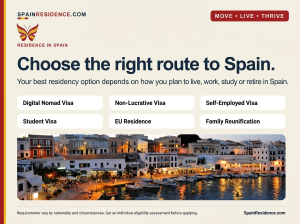
In 2026, Spain has fully embraced a “Digital First” immigration system.
While the new Reloex regulations and the unified digital platform have made applications faster, they’ve also made them less “forgiving.” The days of fixing a mistake at a physical counter are largely over—the system now auto-rejects files that don’t meet the exact 2026 criteria.
If you’re planning your move, here are the 5 most common reasons we are seeing for residency rejections this year.
Missing the New 2026 Financial Thresholds:
Spain’s financial requirements are tied to the IPREM (for Non-Lucrative Visas) and the SMI/Minimum Wage (for Digital Nomad Visas). In 2026, these figures have shifted, and using “last year’s numbers” is a guaranteed rejection.
- Non-Lucrative Visa (NLV): You now need roughly €28,800/year for the main applicant (400% of IPREM) and an additional €7,200 per dependent.
- Digital Nomad Visa (DNV): The 2026 threshold has risen to approximately €2,850/month (200% of the SMI).
- The Trap: Authorities are now looking for consistency. If your bank balance dips below the required amount for even one day in your 6-month history, the “technical rejection” trigger is pulled.
Remote Work on a Non-Lucrative Visa:
This remains the #1 cause of heartbreak. In 2026, Spanish consulates are more aggressive than ever in auditing the “source” of your funds.
If you apply for an NLV but your LinkedIn profile or bank statements suggest you are still actively working remotely for a foreign company, your application will be denied. The NLV is strictly for passive income (pensions, dividends, rental income).
If you want to work from your laptop, you must apply for the Digital Nomad Visa.
The “Apostille & Translation” Expiry Date:
A common mistake is assuming that once a document is apostilled, it’s good forever. In 2026, Spanish immigration requires that Criminal Record Certificates and Marriage/Birth Certificates be issued within 90 days of your application date.
The 2026 Standard: If your background check is 91 days old when you hit “upload” on the digital portal, the system will flag it as “Caducado” (Expired) and reject the file without a human even looking at it.
Health Insurance with “Copagos” (Co-payments):
Spain is very protective of its healthcare system. To get residency, you must prove you won’t be a burden on the state. Many expats buy “Travel Insurance” or “International Health Plans” that include a €10 or €20 co-payment per visit.
The Rule: Your policy must be a Spanish private policy with Sin Copagos (Zero Co-payments) and no waiting periods (sin carencias). If your policy document mentions a deductible of any kind, your residency will be denied.
Applying from the Wrong “Jurisdiction”:
With the 2026 digital overhaul, the system now tracks your entry and exit via the EU Entry/Exit System (EES).
- The Mistake: You cannot apply for a “Consular” visa (like the NLV) while physically standing on Spanish soil as a tourist.
- The Risk: Conversely, if you apply for the Digital Nomad Visa from inside Spain, you must have at least 30 days of legal stay remaining on your 90-day Schengen clock. If you apply on day 89, the system may automatically reject you for being “out of status” before the processing is complete.
Other types of residency available in Spain:
- Digital-Nomad visa Spain (Remote worker in Spain)
- Non-Lucrative Visa Spain (Spanish visa non lucrative)
- Student-Visa Permit (Student-Visa & up-to 30 hours work per week)
- Self-Employed Visa Spain (Self employed expats in Spain)
- All Visa-Categories in Spain (SEE-ALL here; Arraigo, Special Cases, etc.)
Immigration procedures and immigration regulations change regularly, and it is crucial to stay updated with the most recent information from a reliable source. If you have any questions or concerns about your situation, we advise to consult an immigration authority or legal professional who specializes in immigration matters, to do this, please CLICK-HERE »
We offer Spanish Residence Services and can assist you with most Spanish legal processes.
Permanent residency is permitted after 5 years of Temporary Spanish Residency through Digital-Nomad, Non-Lucrative, Student-Visa or Self-Employed. This followed by 5 years of permanent residency in Spain and permits Spanish Citizenship applications to obtain a Spanish Passport.