The Essential Guide to Residency for Non-EU Nationals.
Spain is calling. Whether you are dreaming of sipping coffee in a sun-drenched plaza, starting a remote career from a coastal city, or retiring under the Mediterranean sun, the allure of Spanish life is undeniable.
But before you can fully embrace the pura vida, there is one unavoidable step: securing your legal residency.
For citizens outside the European Union (including the UK, USA, Canada, and Australia), navigating Spain’s immigration system is notoriously complex. From the municipal registry to the biometric TIE card, the paperwork is extensive, and the appointments are scarce.
Here is your straightforward overview of how to obtain residency in Spain—and why you don’t have to do it alone.
The Right Visa for Your Situation:
Your journey begins before you even step foot in Spain. Unlike EU citizens, non-EU nationals cannot simply arrive and declare residency. You must secure a long-term visa from a Spanish Consulate in your home country.
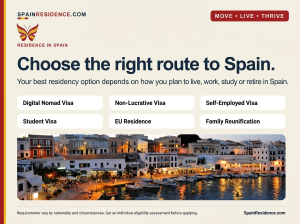
Common visas for non-EU nationals include:
- The Non-Lucrative Visa: For retirees or those with sufficient passive income who do not plan to work in Spain.
- The Work Visa: For those with a contract from a Spanish company.
- The Entrepreneur/Self-Employment Visa: For freelancers and business owners.
- The Digital Nomad Visa: A new, highly popular option for remote workers employed by foreign companies.
Note: Your visa approval is just your “entry ticket.” The physical registration process happens once you arrive.
The Padrón Municipal (Your Local Footprint):
Within the first few days of arriving, your very first administrative task is to register at your local town hall (Ayuntamiento).
This registration, known as the Padrón Municipal, proves you are living in that specific municipality. It is not a residency card, but it is the absolute foundation of your new life—without it, you cannot access public healthcare, register your children in school, or even buy a car.
You will need to fill out a registration form (solicitud de alta) and attend an in-person appointment to receive your Certificado de Empadronamiento. Because this certificate expires after 3 months for administrative purposes, you must ensure you always have a fresh copy on hand.
The TIE Card – Your Golden Ticket to Legal Status:
The single most important document you will ever get in Spain is the TIE (Tarjeta de Identidad de Extranjero). This biometric, credit-card-sized ID proves you are legally resident in Spain and are allowed to stay longer than the standard 90-day tourist limit.
Why the TIE is vital for travel:
If you enter Spain without a TIE, you are subject to the Schengen Area’s Entry/Exit System (EES). This system strictly limits non-residents to 90 days out of every 180. As a TIE holder, you are exempt from this system, allowing you to travel freely in and out of Europe without being flagged as an overstayer.
How to get your TIE:
- Book an appointment (Cita Previa): You must secure a slot at your local provincial Foreigners’ Office (Oficina de Extranjería) or authorized police station.
- Gather your documents: You will need your passport, visa documentation, the Padrón certificate, and the proof of payment for the government processing fee.
- Fingerprinting: At your appointment, your biometric data will be captured.
- Wait: It typically takes 4 to 8 weeks for the card to be printed.
Renewal and Long-Term Status:
Your initial TIE is usually valid for 1 to 2 years. You are legally required to renew it before it expires, and you must also renew it if your address changes.
The ultimate goal is to live in Spain legally for 5 consecutive years, at which point you can apply for Long-Term Residency (valid for 5 years) or, eventually, Spanish citizenship.
The Hidden Challenge: The Bureaucratic Maze:
Here is the reality that most government guides won’t tell you:
The Spanish immigration system is not designed for speed.
- Appointments at the Extranjería offices are notoriously scarce, often filling up within minutes of being released.
- The forms are entirely in Spanish and require exact, non-negotiable formatting.
- A single missing document or incorrectly filled-out form can delay your approval for months, jeopardizing your job, your school enrollment, or your travel plans.
Trying to manage this process from your home country, while juggling a move, a new job, and a language barrier, can quickly turn your dream move into an overwhelming nightmare.
Let SpainResidence.com Handle the Hard Work:
You deserve to focus on the excitement of your new adventure, not the frustration of Spanish bureaucracy. That is exactly what we are here for.
At SpainResidence.com, we specialize in simplifying the immigration process for non-EU nationals. We take the stress out of your move by providing expert, end-to-end assistance tailored to your specific needs.
Our services include:
- Personalized Visa Consultation: We analyze your profile to determine the best and fastest residency route for you.
- Document Preparation & Translation: We ensure your paperwork is flawless and meets all Spanish government requirements.
- Appointment Booking: We navigate the notoriously difficult Cita Previa system to secure your slot at the Extranjería office—saving you weeks of frustration.
- TIE Processing & Renewal Support: From your initial application to your long-term residency renewal, we are your partner every step of the way.
- Padrón Registration Assistance: We guide you through the municipal process to ensure you get your certificate correctly the first time.
Don’t let bureaucracy delay your Spanish dream.
📞 Contact SpainResidence today for a consultation. Let our experts guide you through the process seamlessly, so you can start living the life you came to Spain for—without the paperwork stress.
Choose your preferred residence from the list of residencies available in Spain below:
- Digital-Nomad visa
- Non-Lucrative visa
- Student-Visa Permit (Student-Visa permits up-to 30 hours work per week)
- Self-Employed Visa
- All Visa-Categories (Arraigo, Special Cases, etc.)
Immigration procedures and immigration regulations change regularly, and it is crucial to stay updated with the most recent information from a reliable source. If you have any questions or concerns about your situation, we advise to consult an immigration authority or legal professional who specializes in immigration matters.
We offer Spanish Residence Services and can assist you with most Spanish legal processes.
Permanent residency is permitted after 5 years of Temporary Spanish Residency through Digital-Nomad, Non-Lucrative, Student-Visa or Self-Employed. This followed by 5 years of permanent residency in Spain and permits Spanish Citizenship applications to obtain a Spanish Passport.